ICU / Critical Care Nurse CV Template & Example
Write an ICU / Critical Care Nurse CV that evidences ventilator management, haemodynamic monitoring and ALS in high-acuity environments.
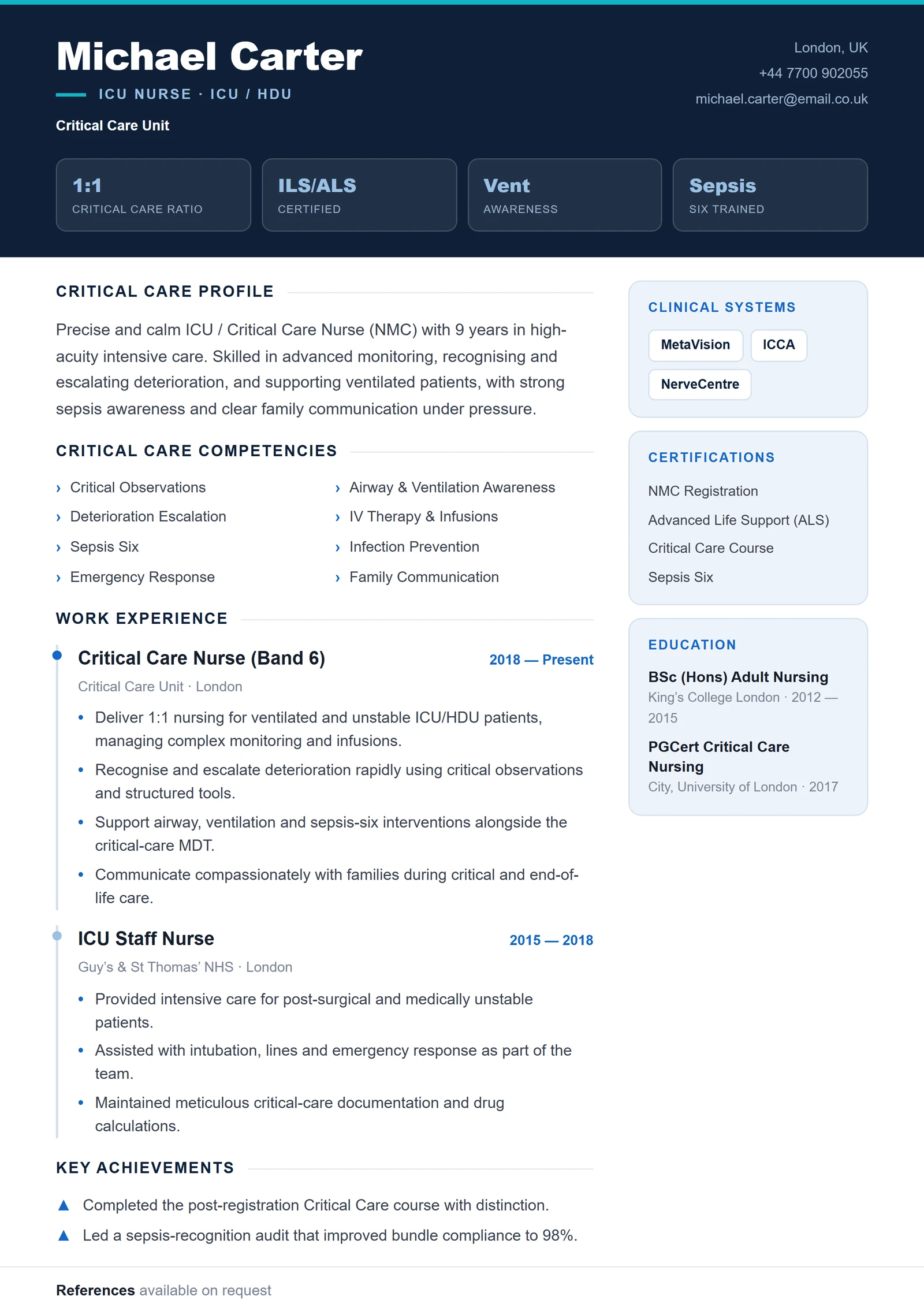
Preview · ICU / Critical Care Nurse CV
Critical Care CVs are read for high-acuity competence: managing ventilated patients, haemodynamic monitoring, titrating vasoactive infusions, and responding within ALS protocols. Leading with your NMC registration, band and the unit type — general ICU, HDU, cardiac or neuro critical care — lets a recruiter match your experience to the vacancy immediately.
This template helps you present that experience clearly, with bullets that show assessment, escalation, sepsis recognition and family communication under pressure. A critical-care course or mentorship experience sits where senior recruiters look for it, and everything stays grounded in what you have actually done.
How to make your ICU / Critical Care Nurse CV stand out
Recruiter expectations
- Clinical / care experience
- Mandatory training
- DBS & registration
- Safeguarding awareness
ATS keywords to include (where true)
Use the terms below only where they genuinely reflect your experience.
Certifications & training
Licences & registration
Achievements worth quantifying
- Improved patient outcomes
- Reduced incidents
- Audit / compliance gains
What a strong ICU / Critical Care Nurse CV should include
- Professional profile / summary
- Lead with your role, registration/band and years in care. Show compassion, safeguarding and person-centred care — backed by evidence, not adjectives.
- Skills & competencies
- Surface clinical competencies recruiters scan for — the right ones for your specialty.
- Experience
- Name the setting and caseload, then quantify: audits, escalations, training, patient outcomes.
- Education
- Qualification, institution and year. Most recent first.
- Certifications & training
- Mandatory training + clinical certifications, kept current (BLS, Safeguarding, IPC…).
- References
- Clinical referees (ward sister, team manager) — 'available on request' is fine.
- Languages
- Language and an honest fluency level.
Clinical action + setting + measurable patient or service outcome.
ICU / Critical Care Nurse CV — frequently asked questions
What should an ICU nurse CV prioritise?
Ventilator and haemodynamic management, ALS, sepsis recognition, and the unit types you have worked in, plus any critical-care course and mentoring or preceptorship experience.
How do I show acuity on my CV?
Describe the patient acuity and interventions you managed — for example ventilation, filtration or multi-organ support — and your role in escalation and team decisions.
Is the critical-care course important to list?
Yes, if you hold or are working towards it. It is a recognised marker of ICU competence and is often screened for in adverts.
How do I move from ward to ICU on my CV?
Highlight transferable acute skills such as deteriorating-patient recognition, ALS and monitoring, plus any critical-care exposure or courses, so recruiters can see your readiness.
Explore related CV guides
Ready to build your ICU / Critical Care Nurse CV?
Start from the ICU / Critical Care Nurse CV template — editable, ATS-safe, and ready to export. Then diagnose, tailor and add a matching cover letter.